Back to work... and yes, of course... serious lack of blogging time. No shortage of blog material in this busy period of baby blossoming however. My little angel is already 6 months old and her personality is emerging as forcefully as her will power. We've reached and traversed many treacherous milestones, all gone unblogged this far, but hopefully I'll find the time to reach into my memory banks, and into the box of "my first..." pictures to share with you the challenges we've faced. I certainly want to talk about starting solids soon, not to mention the inevitable constipation that follows. Sitting and crawling and how to guide baby to develop these skills are also on the list of things to do, not to mention infant potty training ("gasp" I hear you shudder). Vaccinations... when, why, how... and also if!, plus my viewpoint on antibiotics and why they're bad for you are also in the pipeline. As I drag myself off to baby's dreamfeed, let me leave you with a promise that before the week is through, I will have been back here at least once to tell you all about my baby's first solid solid meal and how I embarked on the journey to weaning!
Much much love all you mommies, daddies and babies!!!!
Tuesday, 21 August 2012

Friday, 29 June 2012
She's Supercalifragilisticexpialidocious!
Our Very Own Mary Poppins
She's Supercalifragilisticexpialidocious!
 |
| Having a welcome home lunch with "tete Primrose" |
Having been at work now for nearly a month, I am happy to report that by the grace of God, all is well and baby and mommy are thriving nicely. I am destraught however, to have been unforgivably absent in blog-land, and humbly beg your understanding.
Today's blog inspiration is brought on by an extreme appreciation for the angel who takes care of my baby when I'm away, taking care of others. Our nanny has been living with us since I was 8 months pregnant, and after a 1 month long nanny training course, is (almost) better equipped than I am at looking after my baby.
Primrose is a 27yr old Zimbabwean, and a divorced mother of 2. From her very first day, she easily integrated into our family and her loving, friendly, sunny disposition won me over in an instant. Whenever I came home with little outfits for our baby-to-be or yet another decoration for baby's nursery, she would react with the same excitement I had, buying them, and she and I would spend hours on the then empty nursery room floor, dreaming up how we would arrange the furniture. On the day I went into labour, Primrose had tears in her eyes while she plaited my hair through the contractions, and the same teary eyed face was eagerly waiting at the door when we brought our little angel home.

Much to her delight, we enrolled her in the Sugar & Spice nanny training school when baby was about 2 months old. I took her to classes once a week and collected her again about 4 hours later. The course is designed around 4 Modules aimed at safety, hygiene, health, nutrition and educational play, and after each module she was given a list of things to practice or things to change in the house. I will never forget Primrose walking around my house on her knees, moving every movable object she could reach... "because its danger mam". We also practiced CPR on the teddybears together and when I completed my baby massage course, we practiced massaging the dolls together.
 |
| Prim and I taking time out while baby naps |
Primrose was by my side as I googled my way through every difficult motherhood moment and brought me breakfast in bed when she thought I wasn't eating enough. She fetched baby from me first thing in the morning so I could get some sleep after a difficult night and made my guests tea when they came to visit. Without question Primrose became my 'right hand woman', and when she had to go home for a week to see her sick son, I cried a little everyday. Not only for my 'right hand', but also the friend who had seen me through motherhood from day one. Needless to say, the day she arrived on the train station, baby and I were waiting eagerly, one of us at least with a teary eyed face...
Back at work, everyone asks "who's looking after baby??" with a "I'm so sorry, it must be terrible for you" look in their eyes, but I honestly feel completely at ease knowing that her nanny is taking care of her. You see, having been through it all together, Primrose not only knows her routine back to front, but also knows why its important that we follow it. She knows how to prepare a sterile bottle and even knows what may happen if it became contaminated, and with what she's learned at nanny training, baby's play times are always educational and stimulating.
Obviously there are cons to employing a nanny, and I can see why a family would be hesitant. The obvious downside is leaving your baby in the care of a stranger who you know nothing about. Its also a huge expense and the better the nanny, the more expensive they tend to be. I recommend getting someone to work for you well before baby's born, or at least before you're ready to go back to work, so that you can get to know them yourself. There is after all no better yardstick than a mother's instinct. References are of course always useful, and going to a nanny agency directly ensures trained nannies with CV's and references, though they are definitely more expensive. Finding the right person and then sending her for training yourself may seem costly, but you do end up paying less per month, and its such a pleasure being part of that learning experience, never mind the fact that you will inevitably learn something useful yourself. One other thing to consider is that most nannies have children of their own, and taking care of your little one will likely mean time away from her own. I always make Primrose feel at home and like she's part of the family, we cook together, work together, rest together and play together, and as I trust her with my child's life, I am sure that she would trust me with her's. More than anything I can see that she is genuinely interested in baby's wellbeing and happiness, and I thank God for her everyday.
Good qualities to look out for when choosing a nanny
This may be a little like judging a book by its cover, but their are some human qualities which one can discern in an interview.
- I believe that it is important that a nanny is always someone who cares for children, likes being around children, and even has a playful childlike nature themselves. You want you baby to love the person looking after her, and wouldn't it be nice if her caregiver loved her too?
- Its also really lovely if your nanny is someone you like. She will after all become one of your family. Be sure that you can be around her all day, and that she has a generally friendly disposition... You can't choose family after all, but you can choose your nanny! Try to choose someone with good values, morals, and who's polite and respectful. Your baby will learn from the people she watches.
- Try to discern if your potential nanny is a good listener and if she can follow instructions. Most of her job will consist of following your instructions after all. You won't be able to tell if she agrees with your every child raising idea, but her job is to follow your cue and take instruction from you without trying to enforce her own beliefs. I think its healthy to have someone who is intelligent enough to understand your reasons for doing what you do and who can engage in gentle debate if she feels she may know better. Primrose raised 2 children on her own, and she has a wealth of information that I couldn't read in a year's worth of Preggy mags.
- Communication is vital in the growing years, and while its great to have someone who can teach your baby a second language, it is more important that your nanny speaks your home language fluently. Baby will learn so much of her speech pattern from the person she spends most time with and you need to know that any instructions you give are understood first time round.
- Intelligence is difficult to read in another person, but do try and assess the applicant's level of common sense. So much of parenting revolves around common sense, and you won't be there to make a decision of every unforeseen scenario.
- At your very first meeting you can tell if your nanny is well groomed, and weather she has healthy hygiene habits. Other than this directly affecting the cleanliness of your baby's environment, she will also likely teach her own habits to your child.
There are obviously countless other qualities you would look out for in the interview and during your reference and background check, I only listed things you should make a note to check for when meeting her. And please don't neglect background checks, sometimes even a mother's instinct can be misled.
“No act of kindness is too small. The gift of
kindness may start as a small ripple that over time can turn into a
tidal wave affecting the lives of many.”
Friday, 1 June 2012
Mother's milk - Breastfeeding 101 - Part III (Mastitis)
BREAST FEEDING 101
As
I recover from my second bout of mastitis, I feel an almost religious
urge to write about breast infection today. It has been too long since
my last "breastfeeding" installment and there seems to be a high flow of
reader traffic searching "how+to+breastfeed". So, to appease God... and
my readers, here is the 3rd installment of Breast feeding 101...
MASTITIS
| Courtesy http://grandrapidsnaturalliving.com/cabbage-in-your-bra/ |
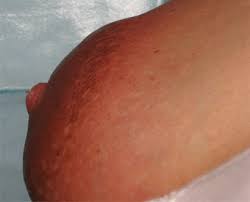 .
.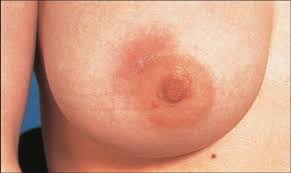
Breast changes in mastitis
The
first important thing to remember about mastitis is that if you are
breastfeeding and feel feverish or flu-y, chances are you have
mastitis.
-
So feel your breasts and try to feel for any hard areas or any warm,
tender areas, or check in the mirror to see if they look anything like
the images above
The next important thing to remember is that not all mastitis is infective.
-
There is a crazy policy in the medical world (God I'm such a Judas,
forgive me Hippocrates) to treat every breastfeeding mom with mastitis
with an antibiotic. I hope that after reading this you will think twice
before blindly accepting an antibiotic. Sometimes you need one, please
don't get me wrong, but definitely not automatically and not always.
This is what the World Health Organisation has to say about "lactational mastitis":
" Mastitis is an inflammatory condition of the breast, which may or may not
be accompanied by infection. It is usually associated with lactation,
so it is also called lactational mastitis or puerperal mastitis...
...Awareness is growing that inefficient removal of milk resulting from poor breastfeeding
technique is an important underlying cause, but mastitis remains synonymous with breast
infection in the minds of many health professionals. They are often unable to
help a woman with the condition to continue to breastfeed, and they may advise her
unnecessarily to stop."
...Awareness is growing that inefficient removal of milk resulting from poor breastfeeding
technique is an important underlying cause, but mastitis remains synonymous with breast
infection in the minds of many health professionals. They are often unable to
help a woman with the condition to continue to breastfeed, and they may advise her
unnecessarily to stop."
Mastitis can therefore be classified into 3 broad categories:
- INFECTIVE
- NON-INFECTIVE INFLAMMATION
the breast tissue is simply inflamed, but there is no germ causing an infection
- MILK STASIS
What are the symptoms?
What
happened to me was I woke up feeling like I had the flu. I spent a day
in bed thinking "oh great this too... God really hates me". You see this
'bout of flu' followed a week of severely cracked nipples and painful
engorged breasts. I had a crying newborn who couldn't feed properly
because I was in too much pain and if there's line between sanity and
postnatal depression, I was barely balancing on it.
My fever went up to 38.5 before it hit me "flu in a breastfeeding mum is mastitis unless proven otherwise!". I checked my breasts and lo and behold my right breast (thankfully not the side with the worse cracking) had a hard, red swollen, tender area. I couldn't guess how long it had been there because when you've just had a baby, the only thing you look at in the mirror is your baby in your arms (you'll see). I panicked because I thought mastitis meant taking an antibiotic for sure and other than wanting to remain drug free while breastfeeding, I also feared that if baby got thrush as a side effect of the antibiotic, she would transfer it to my nipples and that would most likely end my thus far hellish breastfeeding career for good. I was also afraid that the dreaded breast abscess complication would soon follow. Needless to say that line before depression was becoming dangerously thin.
temperature of higher than 37.5 C
FEELING OF BEING SICK
run down, achy muscles, chills
BREAST CHANGES
part or all of one breast is hot, painful, tender to touch, red or swollen
How do I manage it?
Ideally
you should get your self-diagnosis confirmed by a doctor, midwife or
lactation consultant. My mastitis was obvious, so I called my homeopath
for help. Dr Rushmere suggested a remedy called Phytolacca and recommended a lactation consultant/physiotherapist who did house calls, Ruth Katzman.
As I waited for Ruth, who could only come that evening, I took 1 Panado
and 1 Nurofen tablet. (Panado for fever and pain and Nurofen for pain
and inflammation) I had at this stage already had the dreaded Codeine
side effect of constipation, so was staying far away from Myprodol. I
knew I should be doing breast massage and cool (or was it warm?)
compresses, but I felt too sick to move.
My midwife luckily did a house visit on that day so she brought me some phytolacca and bella donna and more importantly held me while I cried. She also counseled me and reassured me that if the sadness went on for too long, help was easy to find.
Ruth arrived later that day and with no idea what to expect, I instinctively breathed a sigh of relief. She took a full history of every problem I'd had since giving birth, including the constipation side effect and painful tear, and promised that she would cover each of my problems. She then watched me breastfeed and taught me to latch baby correctly, she let me do it myself a few times, correcting me each time till I got it right. She then lay me on the bed, covered me in towels, and using an ultrasound probe, forcefully massaged my engorged breasts from the outer edges toward the nipple, focusing mostly on the tender blocked area. I watched litres of milk come out of my breasts, and when she worked on the area that was blocked, the milk came out thick and in strands. After about half an hour of this she showed me how to massage them myself after a hot shower or bath and also how to apply hot cloths over them while I was feeding. She then got baby to drink from me at an angle that would best drain the affected area (in my case this happened to be with baby's legs over my shoulder, while I lay on the bed). Apparently baby suckling is better treatment than any ultrasound. She also did some lazer therapy on my cracked nipples.
Ruth then showed me a few tricks to manage my constipation and vaginal tear. (I will hopefully get a chance to blog this at a later, less breast-centred date)
She also taught me how to feed baby from a cup, and left me a baby feeding cup she happened to have with her, and then she rearranged my feeding schedule so that I was efficiently draining my engorged breasts, while still giving my cracked nipples a rest with nipple shields intermittently, and she showed my exactly how to use my breast pump. She also left me the prescription for All Purpose Nipple Ointment, which cleared up the sore nipples in about 3 days. Believe me when I say, I owe this woman everything.
Ruth
came again the next day to ensure that I was doing everything correctly
and to give me another ultrasound massage. I was already feeling better
and by the end of that day I wasn't having any more fevers and the
redness in my breast had disappeared. We were in agreement that there
was never any need for antibiotics as there was never an infection, and
also that the homeopathic remedy had definitely made an enormous
difference in my healing. After that, I felt like a new person, ready to
face the next hurdle!
My fever went up to 38.5 before it hit me "flu in a breastfeeding mum is mastitis unless proven otherwise!". I checked my breasts and lo and behold my right breast (thankfully not the side with the worse cracking) had a hard, red swollen, tender area. I couldn't guess how long it had been there because when you've just had a baby, the only thing you look at in the mirror is your baby in your arms (you'll see). I panicked because I thought mastitis meant taking an antibiotic for sure and other than wanting to remain drug free while breastfeeding, I also feared that if baby got thrush as a side effect of the antibiotic, she would transfer it to my nipples and that would most likely end my thus far hellish breastfeeding career for good. I was also afraid that the dreaded breast abscess complication would soon follow. Needless to say that line before depression was becoming dangerously thin.
So symptoms....
FEVERtemperature of higher than 37.5 C
FEELING OF BEING SICK
run down, achy muscles, chills
BREAST CHANGES
part or all of one breast is hot, painful, tender to touch, red or swollen
How do I manage it?
My midwife luckily did a house visit on that day so she brought me some phytolacca and bella donna and more importantly held me while I cried. She also counseled me and reassured me that if the sadness went on for too long, help was easy to find.
Ruth arrived later that day and with no idea what to expect, I instinctively breathed a sigh of relief. She took a full history of every problem I'd had since giving birth, including the constipation side effect and painful tear, and promised that she would cover each of my problems. She then watched me breastfeed and taught me to latch baby correctly, she let me do it myself a few times, correcting me each time till I got it right. She then lay me on the bed, covered me in towels, and using an ultrasound probe, forcefully massaged my engorged breasts from the outer edges toward the nipple, focusing mostly on the tender blocked area. I watched litres of milk come out of my breasts, and when she worked on the area that was blocked, the milk came out thick and in strands. After about half an hour of this she showed me how to massage them myself after a hot shower or bath and also how to apply hot cloths over them while I was feeding. She then got baby to drink from me at an angle that would best drain the affected area (in my case this happened to be with baby's legs over my shoulder, while I lay on the bed). Apparently baby suckling is better treatment than any ultrasound. She also did some lazer therapy on my cracked nipples.
Ruth then showed me a few tricks to manage my constipation and vaginal tear. (I will hopefully get a chance to blog this at a later, less breast-centred date)
She also taught me how to feed baby from a cup, and left me a baby feeding cup she happened to have with her, and then she rearranged my feeding schedule so that I was efficiently draining my engorged breasts, while still giving my cracked nipples a rest with nipple shields intermittently, and she showed my exactly how to use my breast pump. She also left me the prescription for All Purpose Nipple Ointment, which cleared up the sore nipples in about 3 days. Believe me when I say, I owe this woman everything.
So management...
1.
Continue feeding! And correct your latch! Baby feeding is best way to
drain the blocked areas. In fact if you want to do the worst possible
thing for yourself right now, then stop breastfeeding. It is NOT an
option, and if you do have to stop feeding, do it after the mastitis has
cleared up.
2.
Rest.. HA HA I hear you say... but as much as you can. Feed in bed, get
someone to stay with you, get a maid, order in, keep baby in bed with
you... whatever it takes. And eat well and gets lots of fluids.
3. Heat. Warmth helps milk to flow before a feed and is also great for healing. For warm compresses use cloths soaked in hot water or poor hot water into nappies. The gel holds the warmth well, but don't pour too much, the nappies swell more than you think. A warm bath with a few drops of lavender (washed off before nursing) or a hot shower has the same effect before feeding or expressing. You can also soak your breasts in a basin of hot water with some lavender or epsom salts.
4. Cold packs also help with pain between feeds, and you can use ice packs or packets of frozen veg. I put cabbage leaves in the freezer and later tried wet nappies in the freezer. The nappies are great because you can refreeze them easily and cabbage leaves are believed to work by releasing a chemical that is both anti-inflammatory and antibiotic. I have entered into numerous debates with doctors on this topic, as many believe it is old wives tale, and that it is simply the coolness of the leaf that helps. Read this article on a study done on the topic and decide for yourself http://www.breastfeedingonline.com/cabbage.shtml
5.
Gentle massage. Massage from outer edges inward toward the nipple,
using your warm compresses or during a bath or shower. It is also useful
to massage toward the nipple while you feed.
6. Medication.
Don't
be afraid to use pain relief... pain restricts healing and worsens your
chances of depression. I used Paracetomol and Ibuprofen for pain and fever.
Anti-inflammatories are self explanatory. I used Ibuprofen for this
Antibiotics
are necessary only if there is an infection. So consider it if you have
a persistent fever of more than 24 hours or if you are acutely ill. A
breast abscess will also require antibiotics and possibly surgery.
Doctors usually prescribe Flucloxacillin or Augmentin. Don't forget to
use a probiotic whenever you use an antibiotic.
Homeopathics work wonders if used correctly and I used Phytolacca for the breast inflammation and Belladonna for fever.
If you are open to alternative methods of management read this blog, I found it very accurate and well written: http://www.authenticparenting.info/2012/02/mastitis.html
7.
Avoid tight constricting clothes and if possible sleep without a bra. I
say this tongue in cheek because in my opinion it is impossible to
sleep without a bra while your breasts are leaking milk everywhere and
your nipples are cracked and over-sensitive. I bought a few elastic
feeding bras like the ones from Yummy Mummy and ditched the bras with a very tight support strap across the boob, like the ones from Woolworths.
8. Empty the breast. Feed 2 hourly if possible and don't neglect the other breast. Try to feed in different positions to drain all parts of the breast and if breastfeeding is impossible, express with a pump or by hand. This is the best time to start your milk storage with a bang, I'm still using milk I stored from my mastitis episode.
This
was something I knew in theory but really needed to learn first hand...
your body will eventually make just the right amount of milk for your
baby at any given time. The key here is 'eventually'. You see, it takes a
few weeks to get the balance right, and for some it under produces and
for other it over produces (AT FIRST). If it seems as though your
breasts are going to burst, (like mine nearly did) express the extra
milk and save it for later, but be patient, it won't always be like
this.
See what La Leche League have to say about oversupply:
MY MASTITIS ROUTINE looked something like this...
I had a cracked nipple on the left and mastitis on the right
Before feeding time I would apply heat or have a hot bath or shower and
express some milk by hand. I would then pump express completely from
the left and feed baby on the right in cross cradle hold, while applying
warm cloths to my breast. Because I was resting the left side, I would
then try to feed about 30ml of the expressed milk with a cup or
syringe.
I then applied cold packs and took whatever medication was due at the appropriate time.
At the next feed I would once again apply heat then hand express, then
feed on the right in a rugby hold. I would then feed baby on the left
using a nipple shield.
At the next feed I fed on the right again and then the left without a nipple shield. All
the while applying All Purpose Nipple Ointment after each feed, and if
she didn't feed enough on the left I would empty my breast by
expressing.
I kept a meticulous diary of exactly what happened at each feed and what happened in between. I also had a "colicky" baby I was trying to treat in the middle of all of this so needed to keep track of her progress too. I recommend you write things down, if not to keep sane, then at least to keep you remembering what you did last.
Please always consult your healthcare provider as each case must be individualised. This blog is merely a guideline so that you can be better informed and so you can open your own management up to informed debate if necessary. Remember most doctors (like me) were only taught a rudimentary version of mastitis management, try to also consult a lactation consultant if possible.
Thursday, 24 May 2012
TENS machine in labour... with love from a doula-to-be
Another blog in response to a message from a friend. Admittedly I know very little about this machine, and my midwife never suggested it, though I had read about its benefits. I just assumed it wasn't something people used much in SA for birth and I'd read that one couldn't use it with a water birth anyway. Nevertheless, my friend is a doula in training, so I guess she would know. Here's what she had to say about...
The TENS Machine
 |
| Courtesy of http://www.labourtensmachine.co.uk/ |
My dearest leila.
This is not the article we spoke of, but it is some amazing device I wish I had known about earlier so that I could have invested in it when I was pregnant...
This is not the article we spoke of, but it is some amazing device I wish I had known about earlier so that I could have invested in it when I was pregnant...
A TENS Machine: Transcutaneous Electrical Nerve Stimulation (TENS) stimulates the release of endorphins & uses the gate theory of pain relief as researched by "Melzack & Wall". TENS machines have been in use since the 1960's and over the years have become smaller, portable and easier to use. The TENS unit is an advanced, small, battery powered device which sends a pulsed electrical stimulus via pads to the skin.
So these little machines assist the body in releasing natural pain killers (endorphins and encephalins) and blocking out pain messages to the brain. They provide a sense of control over labour pain and it gives you an alternative focus.
Why use TENS ?
1)It's a drug free system for pain control
2)Quick & effective pain relief
3)Easy to use, light weight and portable
4)Does not cause drowsiness
5)Can be used for as long as pain relief required
6)There are different pulse settings, you control it

7) Normal- boost mode controllable using light weight seperate boost button
8)Can be used in the comfort of your own home when contractions start or later at hospital
9)Can be used with other methods / prescribed drugs
10)Non invasive and gives you the freedom to move and walk about
What does TENS feel like ?
It is a pleasant tingling sensation on the skin where the pads are placed.
When do I start using the TENS machine?
Recommend you start using the TENS machines at home at the onset of contractions. Early use of TENS promotes the bodies production of endorphins and encephalins - the bodies natural pain killers.
How long should the TENS be used ?
The TENS machine can be worn as needed for as long as desired but a minimum 30 minute duration is recommended for childbirth.
Can I practice with the TENS machine?
It is recommend that you try the TENS machine beforehand so that you are familiar with the operation. You may place the pads on your lower back as you would during labour or you may place them on the inside of your forearm to test. If you are earlier than 36 weeks then limit the test to a short period (less than 1 minute). The pads are self adhesive and re-usable. Re-apply the plastic film to the sticky side of the pads when finished and store in the plastic bag.
When to Not use TENS?
Do not use over broken or desensitised skin. Do not use before 37 weeks unless approved by your doctor. Do not use if you have a pacemaker. Seek advice from doctor if you have epilepsy.
I would like a water birth - can I use TENS ?
Yes, but NOT while you are in the water. Use during the first stage of labour which may take several hours. The midwife will not usually ask you to enter the water after you are 5cm dilated. You need to REMOVE the TENS machine BEFORE you enter the water.
Can I use a Tens machine with other pain relief methods ?
You may continue using the TENS machine with other methods such as pethidine and gas and air.
Can I use the TENS machine after the birth ?
Yes, it is effective for reducing the pain of uterine contractions after birth. The TENS machine can even be used whilst breastfeeding after birth.
Can I take the Labour TENS unit into hospital with me ?
The midwives and doctors are usually very happy for women to use labour TENS. Check with your midwife or doctor if you are unsure. You may need to turn the labour TENS unit off temporarily whilst using electronic monitoring equipment.
Hope it helps
"Friend"
With that I hope that some of you encounter this seemingly miraculous machine on your preggi pain travels, and if you do, or if you already have, please share with us your experience....
My Rite of Passage... the day my baby was born
"Your children are not your children.
They are the sons and daughters of Life's longing for itself.
They come through you but not from you,
And though they are with you yet they belong not to you..."
Khalil Gibran
They are the sons and daughters of Life's longing for itself.
They come through you but not from you,
And though they are with you yet they belong not to you..."
Khalil Gibran

Heather McCue Childbirth educator and doula
I feel there is a necessary prologue to my fairytale (which this is by the way, in case you didn't notice), and this is how it goes... The morning of my baby's birthday I woke up from a very vivid dream about being in labour on a plane. I remember it clearly but won't bore you with details of flight destinations etc. What I will say is that I was on a plane with my husband when I suddenly felt very real, very painful contractions. The general theme of the dream was that I had to face the threat of giving birth without him, and for the first time, it felt terrifying. Hmm seems my subconscious knew what was in store better than I did.
MY BIRTH STORY
Membranes rupture
This begins like all good stories... with a wet spot. I woke up from my very vivid dream at 5am, completely pain-free surprisingly and rather flustered. I lay in bed for a few minutes trying to remember what the pain was like and whether I could handle it in the dream. Failing miserably, I rolled over to hold my husband who, unlike the man in my dream trying to get off the plane without me, was fast asleep and not going anywhere. As I turned I felt a damp patch between my legs. Now, even though I knew the Hollywood-type fountain of water wasn't a common occurrence, I still felt that water breaking would be a little more in your face than a 5x5cm inconspicuous wet spot. So I woke hubby and we proceeded to poke, feel and even smell the spot. Yielding no obvious conclusions, I deduced that if my bladder was still full, I couldn't have wet my pants, and it must be amniotic fluid. So off I went to the toilet... and peed... a lot. As I came back to tell my now fully awake hubby that today may be the day, another few millilitres of fluid spilled out. It was confirmed, my water had broken.The next few hours was spent trying to get some sleep to prepare for the exhausting day ahead. I confess I was far too excited to sleep and lay in bed fantasising about holding my baby for the first time. Not once was I afraid for what was about to happen.
Contractions begin
We waited till 7am before calling my midwife to give her a heads up and the hospital to book a private room. At 8am I started feeling pains in my lower back, which felt suspiciously like period cramps. They were mild and fleeting and disappeared completely for about 30minutes. Sr Ciska's advice was to come to the hospital when the pain became really unbearable, and to forget about timing the contractions. (note that this was safe advice as, because I was a first time mom, labour would progress fairly slowly. Please make sure you discuss with your caregiver before doing the same) I busied myself with repacking my hospital bag and readying the nursery. I had planned to go for a walk but the amniotic fluid kept coming in gushes, and I went through a pack of maternity pads before I even left for the hospital. I also planned to have a bath with my homeopathic BirthBath drops but once your water breaks you need to try and stay sterile down there, so I had a long shower instead.
I was drying my hair when the contractions really started in earnest. I remember having to stop what I was doing and fully concentrate on the few seconds of pain, while doing deep long Yoga breaths. Done properly these contractions last about as long as 2 breaths, and this was totally bearable. I walked around the garden a bit after that (I'd read that walking helps bring baby down and aids contractions efficacy) and each time another contraction started I shouted for my husband so I could hold onto him. Its hard to explain what they felt like, as you've no doubt heard, the brain deliberately erases memory of birth pain so that we can continue reproducing I suppose, but I do remember that it came in waves of increasing then decreasing intensity. So the beginning and end is easy to ride, and there's enough warning to get ready to brace yourself for the crescendo. We practiced a few positions in antenatal classes to aid the pain during labour, and the ones that worked best for me were initially standing and holding onto my husband when the pain came then later squatting between his legs, letting him hold me through the pain.
http://www.qcmb.org.au/news_details/news/upright_positions_in_labour_and_birth
I must emphasize that between contractions you really are completely functional and totally pain-free, and at that stage there was more than enough time to move around and do what I had to do between pains. When the pain became really intense and I could no longer walk or talk through it, we got into the car and made our way to the hospital. Incidentally contractions were now 6 minutes apart and it was midday, 4 hours after contractions began. When you're in labour, time is measured in contractions, and 4 hours is really nothing if you look at it that way.
By the time I reached the hospital, they were so bad, I had to wait till a contraction passed before getting out of the car. As I got to the reception desk another one hit and the porter came rushing with a wheelchair. I had 2 more contractions before we reached the labour ward. My mother met us there with snacks and energy drinks and I spent some time rocking on the birth ball before my midwife arrived.
When Ciska assessed me I was already 6cm dilated and she suggested we get straight into the birthing bath, which is simply a really big bath. Having her there was like having the conductor at an orchestral performance, completely indispensable. She knew from my facial expressions how far I was and she knew exactly what would relieve my pain at which time. In the bath she got hubby to pour hot water onto my lower back during contractions while mom sang lullaby's in my ears between them. She urged me to drink all the time and eat if I could (which I couldn't) When the warm water started slowing the contractions too much she got me to get out and walk for a bit. The gravity made the contractions come really powerfully so she assessed me again and found that there was a lip of cervix not completely dilating. The most painful part of all was when she had to manually move that piece of cervix over baby's head at the most powerful part of a contraction. I screamed till my throat was raw, which made the pain in my pelvis a lot more bearable. I screamed so much during my birth that the lady in the room next door opted for an epidural before her pain even started. I moaned, I sang, I swore, I screamed... and I will do it all again, because sounding your pain is the best way to let it go, and I let it go till the cows came home!
On the bed Ciska offered me some laughing gas, which I grabbed thinking "what the hell, it's something to do" I took a few deep sucks on the mask and felt absolutely no different. She also showed my husband how to put his whole weight on the side of my pelvis while I lay on my side. Either the way that this moved my pelvis helped the baby move down or the pain of his weight distracted me from the contraction, but this really did help me and I felt strong enough to get back into the bath. Ciska showed mom and hubby how to massage me in different places at different point in labour and I can't tell you if this made a major difference or not but they used Heavenly Labour aromatherapy oil throughout, and the smell was at least a distraction from the clinical birth room.
There is a point in your labour, if you're lucky enough to experience it, called the transition phase. It is essentially the last 2 to 3 hours of contractions and a period where baby really settles deep in your pelvis. My own experience of this phase was that just as you get used to the pain (a kind of intense, deep lower back / period pain), it changes and suddenly its a whole new kind of pain (something more like your lower pelvis widening) I also felt myself go into a more trance-like state, during which everything else in room disappeared, and it was just me and the pain and the moaning. It was at this point that I very bravely told my mom to "shut the f*** up!", as every sound or movement or sensation takes you out of your trance and you feel the pain more intensely. Ciska's advice during this phase was to hold onto a pole, stand up in the bath and gyrate my hips with the pain. My mother (who forgave me quite easily thank heaven) later described the scene "like watching an Amazonian princess do a strip dance in a trance" I remember looking at my husband while feeling my eyes roll backward in my skull, and seeing tears in his eyes. All he could do was mutter "wow, you're amazing...
Throughout all this otherworldly type drama, Ciska kept asking me if I was feeling like bearing down. I really didn't know what that was supposed to feel like till I felt it. Its such an obvious urge to push, you can't imagine. My plan was to have a water birth and have my baby be delivered through the water. (Benefits of birthing this way has been demonstrated for years and there is endless amounts of literature to this effect online) As soon as the urge to push began I knew I had to get out of the tub. You see, Vincent Palotti's baths have no handles and therefore there's no traction against which to push. I knew that I was going to push with all my heart and there was no way I could do that in a slippery bath. So I got out the bath and Ciska pulled out a marvelous invention that I had never seen before... a Birth Stool.


http://www.qcmb.org.au/news_details/news/upright_positions_in_labour_and_birth
I must emphasize that between contractions you really are completely functional and totally pain-free, and at that stage there was more than enough time to move around and do what I had to do between pains. When the pain became really intense and I could no longer walk or talk through it, we got into the car and made our way to the hospital. Incidentally contractions were now 6 minutes apart and it was midday, 4 hours after contractions began. When you're in labour, time is measured in contractions, and 4 hours is really nothing if you look at it that way.
Arriving at the hospital
By the time I reached the hospital, they were so bad, I had to wait till a contraction passed before getting out of the car. As I got to the reception desk another one hit and the porter came rushing with a wheelchair. I had 2 more contractions before we reached the labour ward. My mother met us there with snacks and energy drinks and I spent some time rocking on the birth ball before my midwife arrived.
When Ciska assessed me I was already 6cm dilated and she suggested we get straight into the birthing bath, which is simply a really big bath. Having her there was like having the conductor at an orchestral performance, completely indispensable. She knew from my facial expressions how far I was and she knew exactly what would relieve my pain at which time. In the bath she got hubby to pour hot water onto my lower back during contractions while mom sang lullaby's in my ears between them. She urged me to drink all the time and eat if I could (which I couldn't) When the warm water started slowing the contractions too much she got me to get out and walk for a bit. The gravity made the contractions come really powerfully so she assessed me again and found that there was a lip of cervix not completely dilating. The most painful part of all was when she had to manually move that piece of cervix over baby's head at the most powerful part of a contraction. I screamed till my throat was raw, which made the pain in my pelvis a lot more bearable. I screamed so much during my birth that the lady in the room next door opted for an epidural before her pain even started. I moaned, I sang, I swore, I screamed... and I will do it all again, because sounding your pain is the best way to let it go, and I let it go till the cows came home!
On the bed Ciska offered me some laughing gas, which I grabbed thinking "what the hell, it's something to do" I took a few deep sucks on the mask and felt absolutely no different. She also showed my husband how to put his whole weight on the side of my pelvis while I lay on my side. Either the way that this moved my pelvis helped the baby move down or the pain of his weight distracted me from the contraction, but this really did help me and I felt strong enough to get back into the bath. Ciska showed mom and hubby how to massage me in different places at different point in labour and I can't tell you if this made a major difference or not but they used Heavenly Labour aromatherapy oil throughout, and the smell was at least a distraction from the clinical birth room.
There is a point in your labour, if you're lucky enough to experience it, called the transition phase. It is essentially the last 2 to 3 hours of contractions and a period where baby really settles deep in your pelvis. My own experience of this phase was that just as you get used to the pain (a kind of intense, deep lower back / period pain), it changes and suddenly its a whole new kind of pain (something more like your lower pelvis widening) I also felt myself go into a more trance-like state, during which everything else in room disappeared, and it was just me and the pain and the moaning. It was at this point that I very bravely told my mom to "shut the f*** up!", as every sound or movement or sensation takes you out of your trance and you feel the pain more intensely. Ciska's advice during this phase was to hold onto a pole, stand up in the bath and gyrate my hips with the pain. My mother (who forgave me quite easily thank heaven) later described the scene "like watching an Amazonian princess do a strip dance in a trance" I remember looking at my husband while feeling my eyes roll backward in my skull, and seeing tears in his eyes. All he could do was mutter "wow, you're amazing...
PUSH!!!!
Throughout all this otherworldly type drama, Ciska kept asking me if I was feeling like bearing down. I really didn't know what that was supposed to feel like till I felt it. Its such an obvious urge to push, you can't imagine. My plan was to have a water birth and have my baby be delivered through the water. (Benefits of birthing this way has been demonstrated for years and there is endless amounts of literature to this effect online) As soon as the urge to push began I knew I had to get out of the tub. You see, Vincent Palotti's baths have no handles and therefore there's no traction against which to push. I knew that I was going to push with all my heart and there was no way I could do that in a slippery bath. So I got out the bath and Ciska pulled out a marvelous invention that I had never seen before... a Birth Stool.
 |
| Birth Stool: Courtesy of http://inspiredlivesobrien.blogspot.com/ |
It basically allows you the benefit of squatting (gravity, compressed abdomen, open pelvis) plus it's less physically exhausting and has handles to provide counter traction. To me, in my Amazonian trance, it seemed like it had built for what my body instinctively wanted to do. I sat down, got my feet up onto the stool (which Ciska said she'd never seen anyone do before) held onto the handles, and with my husband squatting behind me and holding me tight we waited for the contraction to come so I could push.
When that urge comes it can only be described as an unbearable urge to pass a stool. It literally feels like there's a brick up your bum, and if you don't push it out, your bum will explode. (forgive my bluntness, I was in a trance) What happens when that urge begins is that you find all the energy you can muster after being in labour for 8 hours, which isn't a lot, and you press like you've never pressed before. This is where most epidurals fail a patient... without that unbearable urge, there's little motivation to find that hidden little pocket of energy deep in your soul, and you find that doctors have to do episiotomies, vaccuum extractions or forceps deliveries to get the baby out.
My mom placed herself right in front of the action so she could be the first to see her grandchild and Ciska opened the delivery tray and put on her gloves. It took about 3 pushes before my mom started crying and saying "I can see the head baby, I can see the head!" I then fought my way through another 3 before baby's head was completely delivered. Mom was at this point sobbing her heart out and I was about ready to pass out from exhaustion. I knew the shoulders still had to come, but that essentially the worst was over, and that overwhelming sense of imminent relief motivated a final surge of energy.
What I had forgotten was that there is a brief moment when you really shouldn't push and that moment is to allow the baby to rotate its body so that one shoulder is delivered at a time. As Ciska screamed "OK Leilatjie, now pant when the pain comes and DON'T PUSH", I couldn't help myself, and screamed "I have to!!!!!" Had she said that it only takes a second or 2 and that I would probably tear if I pushed, I may very well have fought the urge and bitten back for a few more moments, but all I could think was "I can't go on any longer" and pushed with all my might... so at 4:35pm... my beautiful baby was born.

A baby is born
The feeling for every mom as they hand you your baby must be the greatest in the world, or so I thought. I remember feeling like I was a million miles away, what I imagine a near death experience to feel like (I'm sure there's an irony in that, but its too deep to delve into in this forum) and all I felt was an overwhelming relief for the longest time. The baby in my arms was mine and I instantly loved it, but it was still a "it" for quite a while. We let the cord stop pulsating before the clamps were applied and my husband 'cut my baby from me'. Again there is lots of literature for and against delayed cord cutting but I weighed up my priorities and decided to wait till nature was ready for me to let go. The placenta delivery happened effortlessly and soon afterward.
If any of you meditate deeply, you will know that eating something settles the energies and kind of 'brings you back to earth', well I experienced that first hand when I suddenly felt myself slip back into myself the minute I took a bite of the sandwich next to my bed. I suddenly became aware of the fact that the baby in the room belonged to me, and that the person who had been growing in my womb was finally here to meet me. That moment was the greatest in the world and I almost wanted to do it all again, just to feel that high one more time.
An unfortunate side effect of coming back into one's body is of course feeling pain again. And a strange stinging was happening between my legs. The one thing I didn't prepare for, and the one thing I most expected to happen (talk about manifesting your reality), I tore. It all happened in the moment that I pushed instead of panted and I didn't feel a thing until that moment, which was actually Ciska injecting anaesthetic to sew me up. It wasn't a bad tear thankfully, but did interfere with me getting up and walking out of that labour room. Ciska had mom run me a new bath and baby and I had our first bath together before facing the world.
So there I was, smiling more in my soul than on my tired face, being pushed in a wheelchair to my hospital bed, holding my little newborn tightly to my chest... proud to have earned the new title of "Mother".

Comments, questions, criticism?
Please feel free to share
Sunday, 20 May 2012
"In the beginning..." My birth plan

Today my blog is dedicated to a friend who wrote the following message:
Hi leila.
Was reading your blog, very useful:) I'm 24 weeks preggies, looking forward to my little guy/girl. Please detail your labour, I would really like to know what I can do to prep for it, etc. And discuss your own experience, did u use a midwife, where u gave birth, what u did for pain relief, did you tear, how can you prevent tearing, would you recommend a midwife, etc. Would really like to learn all I can:))
Was reading your blog, very useful:) I'm 24 weeks preggies, looking forward to my little guy/girl. Please detail your labour, I would really like to know what I can do to prep for it, etc. And discuss your own experience, did u use a midwife, where u gave birth, what u did for pain relief, did you tear, how can you prevent tearing, would you recommend a midwife, etc. Would really like to learn all I can:))
So in reply as promised, even though I did say I didn't wanna write about it...
Dear anonymous friend :)
The following story is mine. Each and every step detailed was taken by me, because of who I am, because of my beliefs and what knowledge has come to me by the grace of God. Your story is your own, and the choices you make will depend on your life story, please don't let mine influence yours and don't ever let someone else's make you feel as though you should have done differently. I hope that by sharing with you, all I do is illustrate that there is much more to your birth than you are led to believe, and that every step is yours to choose, as long as you are equipped with the right knowledge. So without further ado here is...
The following story is mine. Each and every step detailed was taken by me, because of who I am, because of my beliefs and what knowledge has come to me by the grace of God. Your story is your own, and the choices you make will depend on your life story, please don't let mine influence yours and don't ever let someone else's make you feel as though you should have done differently. I hope that by sharing with you, all I do is illustrate that there is much more to your birth than you are led to believe, and that every step is yours to choose, as long as you are equipped with the right knowledge. So without further ado here is...
MY BIRTH PLAN
(They
call it a birth "plan", because like all plans, its completely
hypothetical and very rarely has much to do with reality) The first
thing I did was think about what I wanted in the following salient
points, in no particular order:
- WHICH HOSPITAL
- WHICH OB GYN
- DID I WANT A MIDWIFE, IF SO WHO
- DID I NEED ANTENATAL CLASSES, IF SO WHO
- WHAT KIND OF BIRTH
- WHICH INTERVENTIONS
- WHAT KIND OF PAIN RELIEF
- WHO WOULD BE WITH ME
I
started, like most people do, with a gynae. As a GP myself, I know its
the first thing you suggest to a newly pregnant mum. I now know that
this is completely the upside down order of things. Nevertheless, I had
an excellent gynae, Dr Elmarie Basson. She works from City Park
hospital, and I was quite happy with traveling to town to deliver. We
saw her for most antenatal visits and I loved her. I already knew that I
didn't want a C-section, which everyone seemed to be very surprised
about. Apparently medical professionals historically prefer Caesarians
(horror of horrors, though who am I to judge) because they've seen what
natural birth does to a woman. I've seen what an operation does to a
woman too, and I'm still sure I chose the path of lesser evil. Seeing
the intense pain and difficulty moms have to endure after Caesars, just
makes me more sure. I'm also a au naturale kinda doctor and in my mind
the 'rite of passage' is beneficial in more ways than simply the
randomised-trialed-scientifically-proven kind.
I
also knew I wanted to give birth in a hospital. As much as I believe in
the will of God, I believe that we have to be as prepared as we can. My
lounge just didn't feel like the place I could be prepared. Ideally I
would have liked to have all the women in my family present, but that
number of women talking about the intimate details of my birth for years
later scared me a little. The people who finally won the toss was of
course my mother (who already had experience in happily delivering 3
children in exactly the way I wanted... quick and easy) and my dear
husband (who was mostly chosen because he would have cried if I didn't
choose him). To be honest I truly believed that he would faint in the
first few minutes, before actually getting a chance to say something
useful like "Are you a man or mouse?!" or "Pain is your friend!".
Things
took an odd turn when we started talking to my gynae about the birth
(this oddly only happens quite late into the pregnancy, for me it was
around 24 weeks) I really wanted my own midwife as I'd heard that
laboring with a midwife had better outcomes for baby and mommy, and I've
delivered enough babies to know that things would be a lot more
pleasant if you had a friendly, familiar (professional) face helping you
through.
Problem
number 1, Dr Basson does not work with midwives at all, ever, full
stop. I was willing to overlook this issue, and as one does with plans,
started working on plan B. The plan without a midwife.
Problem
2 arose when I went and visited City Park hospital. The staff were
incredible and as I'd worked in their trauma unit, I already felt at
home. But the labour ward itself was in a bad state as far as private
hospitals go. It was 2 or 4 women sharing a ward, with dirty windows and
dodgy 1980's floral curtaining. The labour room was dark, small and
scary, the passages were really narrow and there was only one bathroom
on the floor. I hope I'm not coming off as a snob, but hospitals are
expensive, I didn't wanna feel like I was staying in a cheap hotel
during the most important event of my life, not at that price. I also
wanted to feel that I could relax in hospital for a day or 2 before
entering into the great abyss of mommyhood. Sharing with 3 other women
and crying babies is not my idea of relaxation.
I visited Cape Town mediclinic that same afternoon,
and in sharp contrast it had all the makings of a good homely hotel, but
it also felt a little too homely and I was sceptical about the clinical
care. Speaking to Dr Basson later that day, I discovered that the
clinical care at mediclinic was indeed not up to scratch and she had had
too many bad experiences at that hospital. She refused to deliver my
baby there and we made a decision together that I be transferred to Dr
Jacky Searle at Vincent Palotti.
Dr Searle was
incredible. She saw me quickly, we got along really well and as luck
would have it, was happy to work with a midwife. I was over the moon
about delivering at Vincent Pallotti as it was almost my second home,
having worked in their trauma unit for years, and also because my practice is right next door.
I
really started researching birth options in earnest at this point,
having learned my lesson for leaving it to the end. I also knew that my
midwife would want to know what my plan was in more detail.
Having
spoken to every mother and pregnant woman who walked into my practice
doors while I was pregnant, I knew that most women have epidurals. I
also knew that most women are offered epidurals before they've even
really felt the pain of labour. What I learnt in medschool was that
epidurals increase your chances of needing some sort of assistance in
labour eg episiotomies, vacuum extractions, forceps delivery, Caesarian
sections... all of which I knew for a fact I did not want, and that like
anything, they do carry risk,
sometimes with devastating consequences. Of all the female patients I'd
spoken to, only 3 had natural births with no epidural or other pain
relief... only 3.
Armed with this knowledge I marched off to meet Sr Ciska at Birth Options
in Plumstead. You know when things happen in your life that change your
life forever? That's what happened when I met Ciska. She was so
wonderful and so calm and so confident that I suddenly felt I could do
anything. For the first time in my life, I considered having natural
birth without pain relief at all. I say no pain relief because I knew
that I didn't want anything that could harm the baby in any way from the
start, so medical pain relief
was out anyway. Just because I considered it, doesn't mean I believed
that it would happen, but I did start to think about how wonderful it
would be if I really could labour my child like our mothers and
grandmothers did... screaming with all their hearts!
Both Ciska and Jacky recommended I go to Emma Numanoglu's antenatal classes, called Me a Mama
in Rondebosch. I hurriedly dragged my hubby off to the first available
class and once again felt like everything was going to be different from
that moment. I could go on forever about how fantastic these classes
were. I mean I thought I knew it all and was just going so my hubby
wouldn't be a blithering idiot in the labour ward. Turns out she taught
me more useful information about birth than I ever learnt at med
school... and my hubby definitely wasn't a blithering idiot, he ended up
being completely indispensable!
The
thing that Emma said though, that made the greatest impact, was
something I really already knew... THE PAIN ENDS! I mean, I know it ends
eventually, but it comes in contractions. So each contraction is a tiny
little bite sized, manageable fraction of pain. OK that's over
simplifying it, but the little detail that I was missing is that you
only have to be strong for a minute, then God lets you rest and get your
strength back. Granted it gets stronger and closer together as time
goes by, but by the time its on top of each other, you're almost ready
to push. To give you an idea, contractions can be 20 minutes apart and
last 30 seconds at first, increasing to about 60 seconds long and 5
minutes apart in active labour.

I mean that's doable right?
I mean that's doable right?
Yea
I thought so too, so I started focusing on having a pain killer free
birth. What I learned was that women who go to hospital too early have a
greater chance of needing intervention... so I planned to go as late as
possible. I also learned that the breath is the most important factor
in relieving pain... so I learned how to breathe properly in labor.
(Funnily enough, and remember this, panting is only effective
when you have to hold back the urge to push, the rest of the time deep,
slow Yoga breaths really do wonders to make contractions seem shorter
and milder.) I learned that warm water has amazing pain relief
qualities... so I made sure that Vincent Palotti had a laboring bath. I
also let Ciska know that she was not to even mention pain relief to me
during birth.
The
next hurdle I wanted to overcome was the dreaded vaginal tear. My big
fear was having a third degree tear (that means right through to the bum
:( ) and I knew this was one thing I couldn't prepare for... or could
I? I discussed my fear with Ciska and she said, "oh yes you can", and lo
and behold she pulled out a little torture device called an Epi No,
birth trainer. This little device is essentially so you can practice
'giving birth' to an increasingly larger balloon, meant to mimic a
baby's head. The balloon is inserted and then pumped up gradually more
and more each day till it actually gets to the size of a baby's head
(yes you can scream now), and after allowing it to stretch inside you,
you then exercise your pelvic floor muscles by pushing it out.

The next glitch came as I patiently waited for my due date to arrive.
The glitch part happened when the day came and went, and I still had no
sign of imminent labour. I had many friends and patients who were
induced because of going past their due date and I'd seen many of those
have to have an epidural because the pain is so much more intense, or
worse, move to Caesar because of failure of labour to progress safely. I
also feel more than know, that a baby and a mother should be ready to
bring that child into the world, and science doesn't have the
capabilities to assess that readiness on every level yet. So, knowing
that I didn't want to be induced into labour, the passing of my due date
came with a bit of anxiety. I spent the last few of my uncomfortable,
bloated pregnant days first googling "natural labour inducing methods",
and the rest of the time, swimming furiously, eating Basil, getting
acupressure massages and swallowing Evening Primrose Oil capsules.(This
was the most comprehensive list I found btw - http://wrylilt.hubpages.com/hub/Ways-to-induce-Labour-Naturally) It was somewhere in this time that I also came across some homeopathic aids to labour. I bought the Feel Good Health
labour remedies:Birth Drops (to drink during labour to assist the
process); Heavenly Labour (a massage oil to encourage contractions and
assist in pain control); and BirthBath oil (a bath oil to add to the
birth water in first stage, to facilitate labour)
to be continued...

If your birth plan was similar or completely different, or even if you didn't have one, please share your comments for our readers...
Subscribe to:
Posts (Atom)